Adobe $1.4B Ad Spend: Combating AI Skepticism
Adobe ramped up its 2025 ad budget to $1.4 billion to combat AI skepticism, focusing on tools like Firefly and GenStudio. Read the full insights.

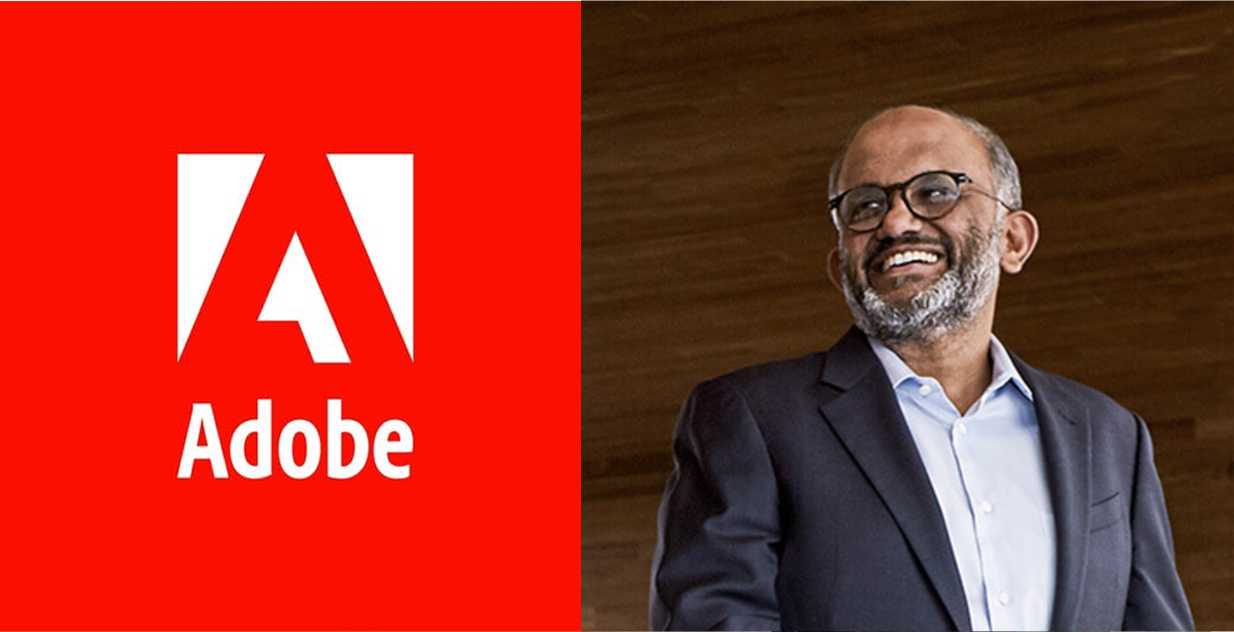
In a proactive move amid growing investor doubts and fierce competition from AI start-ups, Adobe Inc. ramped up its advertising budget to a staggering $1.4 billion in 2025, marking a 30% increase from the previous year, according to Bloomberg.
This surge, which outpaces peers like Salesforce and Meta as a percentage of revenue, underscores Adobe’s aggressive push to reposition itself as an AI leader rather than a victim of generative technology disruption, notes TipRanks.
A significant portion of this spend was directed towards promoting AI tools like Firefly and GenStudio. The strategy aims to address concerns that simpler rivals, such as Midjourney and Canva, could erode Adobe’s established dominance in creative software. This financial flex comes at a pivotal time, considering Adobe’s stock has plummeted over 50% since early 2024, hitting lows not seen since 2019.
However, Adobe’s investment is not merely an advertising blitz; it is part of a broader strategy to harness AI for growth, as detailed in its freshly released 2026 AI and Digital Trends Report.
Fighting AI Fears Head-On
Drawing from a global survey of 3,000 CX executives and practitioners, the report highlights the transformative potential of generative and agentic AI, while also exposing critical gaps that could hinder brands in 2026.
Adobe’s 2025 ad investments spanned high-visibility avenues, including outdoor billboards, train stations, bike shares, and high-profile sponsorships like the Sundance Film Festival, as seen on LinkedIn. The central focus has been showcasing AI innovations such as Firefly, positioned as an IP-safe video generation tool, and GenStudio, designed to streamline marketing campaigns with features like bulk asset resizing and content agents.
This defensive play responds to scepticism that Adobe is lagging in the AI race, where competitors are actively attempting to chip away at its market share in creative tools. The spend represents a strategic pivot: as AI democratises content creation, Adobe is heavily marketing its enterprise-grade, ethical AI offerings.
For marketers, this signals a broader industry trend—brands must actively combat “AI fatigue” through targeted campaigns that highlight tangible value over hype.
AI’s Promise and Pitfalls: 2026 Trends
Adobe’s 2026 AI and Digital Trends Report paints an optimistic yet cautious picture of AI’s role in customer experience (CX). Key insights include:
- Generative AI Wins: 76% of organisations report improvements in content ideation and production speed/volume due to genAI. This aligns with broader statistics indicating that 67% of marketers expect AI to enable hyper-personalised experiences, such as curated recommendations.
- Agentic AI Ambitions: Brands are increasingly eyeing agentic AI—autonomous systems that act on user intent—for conversational and contextual engagement. However, foundational gaps persist, such as fragmented data, uneven executive-practitioner alignment, and rare enterprise-wide deployment.
- Shrinking Attention Spans: AI is accelerating the need for rapid, standout content, making human-centred CX crucial to building consumer trust.
Furthermore, Adobe’s separate 2026 Creative Trends Forecast emphasises immersive visuals, multisensory engagement, surreal imagery, and cultural authenticity. Trends like “Connectioneering” (fostering community) and “Local Flavour” (cultural relevance) illustrate how brands can leverage AI without losing authenticity.
The report also notes surging referrals from AI sources, which are boosting engagement and conversions in sectors like retail, travel, and finance. Yet, consumer sentiment remains mixed; around 56% are indifferent to AI-made ads, and acceptance drops further to 44% for more artistic mediums like music, according to Marketing Brew.
Implications for Marketers
Adobe’s strategy offers clear lessons for 2026. Investing in AI involves not just leveraging the tools, but managing perception. Marketers are advised to prioritise:
- Ethical AI Integration: Utilise commercially safe models like Firefly to avoid IP risks and build trust.
- Data Foundations: Address gaps in unified data to unlock the full potential of agentic AI.
- Human-AI Balance: Leverage genAI for efficiency while emphasising authentic, culturally resonant content.
- ROI Focus: As AI turns content into a growth engine, track metrics like personalisation impact and AI-sourced traffic conversions.
In an era where AI hype meets real-world scepticism, Adobe’s $1.4 billion expenditure highlights a key reality: innovation alone is insufficient; brands must effectively market their AI narrative to secure market share.
People Also Ask (FAQs)
Why did Adobe increase its ad spend to $1.4 billion in 2025? Adobe increased its advertising budget by 30% to combat AI scepticism and position itself as an AI leader, promoting tools like Firefly and GenStudio amidst competition from start-ups like Midjourney and Canva.
What are the key findings of Adobe’s 2026 AI and Digital Trends Report? The report found that 76% of organisations see improvements from generative AI, but highlighted gaps preventing the deployment of agentic AI. It also noted a mixed consumer sentiment towards AI-generated content.
What is Adobe Firefly and GenStudio? Firefly is Adobe’s suite of creative generative AI models, designed to be commercially safe. GenStudio is an enterprise application that helps marketing teams manage and measure content, using AI to streamline campaigns.
The AI narrative war in enterprise software
Adobe’s $1.4 billion advertising investment is a textbook example of what is becoming the dominant dynamic in enterprise software in 2026: the race to own the “trusted AI” positioning before that positioning gets captured by a competitor.
The challenge for Adobe is structural. Its core products — Photoshop, Illustrator, Premiere Pro — are tools of professional creative production. The generative AI revolution threatens to commoditise the output of those tools: if Midjourney can produce a professional-quality image in four seconds for free, the value of twelve years of Photoshop skills is reduced. Adobe’s answer to this threat is positioning its AI as the enterprise-safe, rights-cleared, commercially indemnified version of generative AI — the option a brand chooses not because it is the cheapest or most impressive, but because it will not expose the company to copyright litigation or data leakage.
This is a defensible position, but it requires the advertising investment to work. Creative professionals at agencies and brands need to believe that choosing Firefly over Midjourney or DALL-E is a commercially and legally rational decision, not just a conservative one. The $1.4 billion is, in large part, paying for that belief.
What agencies dependent on Adobe products should watch
For advertising agencies whose production pipelines are built entirely around the Adobe Creative Cloud ecosystem, the current period requires active evaluation rather than passive dependency.
Adobe’s IP-safe positioning is genuine — the company has committed legal indemnification for commercial Firefly outputs in a way that open-source and most competitor tools have not. For agencies producing advertising creative for large brands with significant legal exposure, this indemnification has real value. The question is whether that value justifies the cost differential between Adobe’s enterprise pricing and the alternatives.
The more pressing concern for agencies is Adobe’s evolution from point creative tools (Photoshop, Illustrator) toward an integrated marketing workflow platform (GenStudio, Experience Cloud). This strategic direction — building towards an end-to-end AI-powered marketing operations platform — positions Adobe as a competitor to the marketing technology stacks that agencies currently manage for clients. Agencies that currently derive revenue from managing Adobe products on behalf of clients should monitor whether Adobe’s platform strategy is designed to remove the agency layer from the workflow rather than support it.
People Also Ask (additional)
Is Adobe losing market share to AI competitors? Adobe’s stock declined over 50% from early 2024 levels amid investor concern about competition from tools like Midjourney and Canva, but the company’s revenue has remained resilient due to its enterprise customer base and long-term contract structure.
What is Adobe’s AI strategy for 2026? Adobe’s strategy centres on positioning Firefly as an IP-safe, commercially indemnified generative AI tool for enterprise creative production, supported by a $1.4 billion advertising investment to establish that positioning with brand and agency buyers.
Tags
Related Stories
AI shopping agents convert 60% better. Most brands are invisible
AI referral traffic converts 60% better than everything else. The number is real and misleading at the same time. Here is what to fix, and what to ignore.
Read More
TV ad cap removed in India: advertisers gained more than broadcasters
India scrapped the 12-minute TV ad cap in a year when ad volumes fell 7% and BARC ratings are suspended. That combination hands leverage to media buyers.
Read More
Last-click attribution is lying to you. Here is what to use instead
Most brands are still crediting the last ad their customer clicked for every sale. That model ignores almost everything that actually drove the purchase. Here is the honest picture.
Read More
Leave a comment